


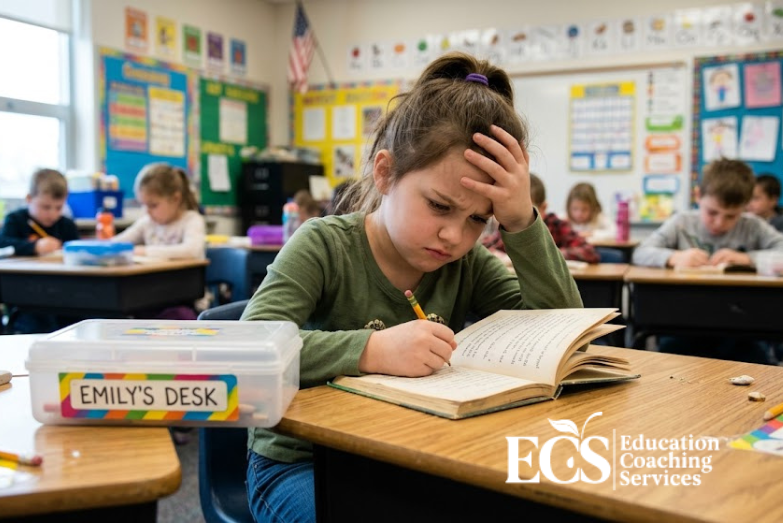
When a child 2 grade levels behind in reading hits third or fourth grade, the gap often widens because school shifts from learning to read to reading to learn. This reality is usually caused by missing foundational phonics skills rather than a lack of intelligence. Effective reading intervention for kids must focus on scientific decoding methods to help struggling readers catch up quickly.
Why is my child 2 grade levels behind in reading?
Most children fall behind because they have not mastered the ability to connect sounds to letters. This is often called a gap in foundational reading skills. In many classrooms, kids are taught to guess words based on pictures or context. When books get harder, and the pictures disappear, these struggling readers hit a wall.
By the time a student reaches a certain grade level, the school assumes they can read fluently. If the child is still sounding out every word, they cannot focus on what the story actually means.
This creates a 3rd-grade reading gap that feels impossible to fix through standard classroom instruction alone. It is not about how hard the child is trying. It is about the method used to teach them.
Can a child really close the literacy gap?
Yes, a child can close the gap, but it requires a shift in how they learn to read. Traditional tutoring often just helps a child finish their homework. That does not solve the root problem. True elementary reading help focuses on brain-based instruction that builds new pathways for decoding words.
To see real change, the instruction must be repetitive and systematic. Research shows that reading difficulties often stem from a lack of phonemic awareness.
Once a student understands the logic behind the English language, they stop guessing. This is the only way to move a child reading below expectations back toward their peers.
How do read alouds help a child with reading difficulties?
Read alouds are a powerful tool for building vocabulary and listening comprehension while a child is still learning to decode. When you read to your child, you keep their interest in stories alive. This prevents them from hating books just because the physical act of reading is hard right now.
Even if a student is struggling with reading, their ears can often process much higher-level information than their eyes can. Listening to complex stories helps them stay on pace with their peers in terms of general knowledge. It also makes finding books they enjoy much easier once their skills finally catch up.
What is the best way to help struggling readers at home?
The best way to help is to stop the guessing habit immediately. If your child hits a word they do not know, do not tell them to look at the picture. Do not ask them what word would “make sense” in the sentence. Instead, help them look at every letter and sound the word out from left to right.
Building reading skills at home should feel low-pressure but consistent. Focus on short sessions that target specific sounds. When a child starts to read fluently, even simple sentences, their confidence grows.
This confidence is what eventually leads them to pick up books on their own.
FAQs
What are the signs of a 3rd-grade reading gap?
Common signs include avoiding reading out loud, guessing words based on the first letter, and failing to remember what they just read. By third grade, the work becomes more about understanding the text. If a child is still slow at sounding out words, they will fall behind in science and social studies too.
How long does it take to get a child back to grade level?
Every child is different, but intense and scientific intervention can often show results in a few months. Closing a two-year gap usually requires consistent work at least two to three times a week. The goal is to master the sounds they missed in earlier grades so they can handle harder books.
Is my child just a “late bloomer” in reading?
The idea of a late bloomer is often a myth in the education world. Most children who are behind in first grade remain behind without specific help. Waiting for it to “click” can lead to the gap growing larger. Early action is always better than waiting.
Why does my child struggle with reading even though they are smart?
Reading is a mechanical skill, not an IQ test. Many brilliant children struggle with the specific brain processes needed to decode words. Once they are given the right tools, their high intelligence allows them to take off and excel.
What should I look for when finding books for a struggling reader?
Look for books that are “decodable.” These are stories that only use sounds the child has already learned. If a book has too many “rule breaker” words, the child will get frustrated. Success with simple books builds the stamina needed for harder ones.
Take Action for Your Child
If your child is one of the many struggling readers stuck behind their peers, the standard school approach may not be enough. You need a partner who understands the science of how kids actually learn to read.
At Education Coaching Services (ECS), we have been helping parents change their child’s educational path since 2012. We focus on K-6 students who are 1 to 3 grade levels behind. We use the Really Great Reading program because it is the most effective system we have seen for getting fast, permanent results.
We believe so strongly in our methods and our ability to help your child that we offer a money-back guarantee. You don’t have to navigate the school system alone. We coach parents and move children in a positive direction.
Comments are closed